$19.00
Webcast
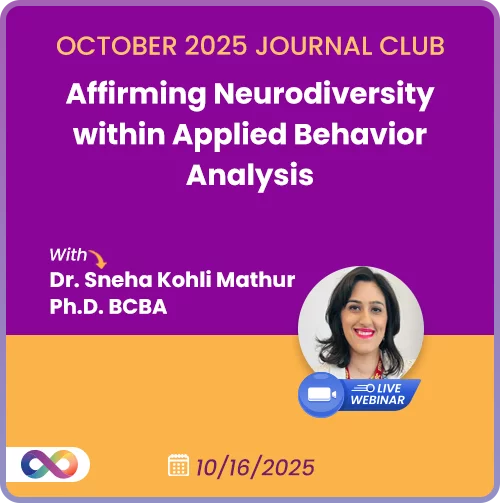
Affirming Neurodiversity within Applied Behavior Analysis
$19.99
Description
Subject Matter Expert: Dr Sneha Kohli Mathur, Ph.D. BCBA | Host: Maria Nicolaou, MSc BCBA
LIVE WEBINAR: October 16, 2025 | 10:00 AM PST / 1:00 PM EST
Are you committed to advancing ABA in ways that affirm neurodiversity, center autistic voices, and uphold the highest ethical standards? Join Special Learning’s Journal Club—an engaging and collaborative forum for professionals who are passionate about evolving ABA into a more inclusive, compassionate, and socially just science.
In this month’s Journal Club, we will be exploring the article Affirming Neurodiversity within Applied Behavior Analysis by Sneha Kohli Mathur, Ellie Renz, and Jonathan Tarbox—a paper that critically addresses concerns raised by autistic advocates and provides practical guidance for integrating the neurodiversity paradigm into ABA research and practice.
Overview:
Criticisms of ABA from the autistic community have intensified, highlighting ethical concerns around masking, compliance, erasure of identity, and lack of autistic representation in research and practice. This article acknowledges these concerns, situating them within the social model of disability and the neurodiversity paradigm. The authors emphasize the ethical obligation for ABA providers to listen to autistic voices with humility, prioritize autonomy, and shift away from ableist practices.
The article explores:
- Historical tensions between the medical model of disability and the social model.
- How ABA has sometimes contributed to harm by overemphasizing compliance and neurotypical norms.
- The risks of ignoring autistic perspectives in research, practice, and organizational decision-making.
- Pathways for affirming neurodiversity through client-centered goal selection, trauma-informed care, and the inclusion of autistic scholars and practitioners.
- By reorienting ABA towards collaboration, self-advocacy, and strengths-based practices, the field can evolve into a discipline that truly supports dignity, authenticity, and quality of life for autistic individuals.
Who Should Attend:
• Behavior analysts committed to integrating neurodiversity-affirming practices
• Supervisors and educators shaping the next generation of practitioners
• Practitioners reflecting on ethical concerns in traditional ABA methods
• Administrators, policymakers, and advocates seeking inclusive autism services
Don’t miss this opportunity to explore how ABA can grow by centering neurodiversity, amplifying autistic voices, and rejecting ableist practices.
Learning Objectives:
- Explain the distinction between the medical model of disability and the social model as it applies to autism and ABA.
- Identify major criticisms raised by autistic advocates regarding masking, compliance, and identity erasure.
- Apply practical strategies for integrating neurodiversity-affirming practices, including assent-based interventions and trauma-informed care.
MANDATORY DISCLAIMER:The Behavior Analyst Certification Board (“BACB”) does not sponsor, approve or endorse Special Learning, the materials, information, or sessions identified herein.
For cancellations and refunds, please see our policy HERE.
What's inside
What’s inside
1 section · 2 items
Course content
- Affirming Neurodiversity within Applied Behavior Analysis · video
- Affirming Neurodiversity within Applied Behavior Analysis · knowledge check
CertificateHow to finish, license and refunds
How to finish and get your certificate
- Complete the 1 required lesson.
- Pass the knowledge check (3 questions) with a score of 80% or higher. You can retake it as many times as you need.
- Complete the course evaluation.
- Your certificate is issued when you finish. Download it any time from My certificates.