Explore the Program
Empower Your Team. Reduce Burnout.
Imporve Client Outcomes. ABA Staff Turnover Shield
Reserve Your Seat
Affirming Neurodiversity within Applied Behavior Analysis
Start Your 7-day Free Trial
Track, Collaborate, Empower – Your Child's Growth Starts with BeMe
• Track Daily Activities
• Voice-to-Text Journaling
• Unlimited Care Team & Professionals
• Parent Training, Curriculum & Resources worth over $1000 Schedule a Demo
Automate And Transform Your ABA Practice For Just $8/Month/Client (25 Client Minimum)Positive Practices in Behavioral Support Training
Reserve a Seat
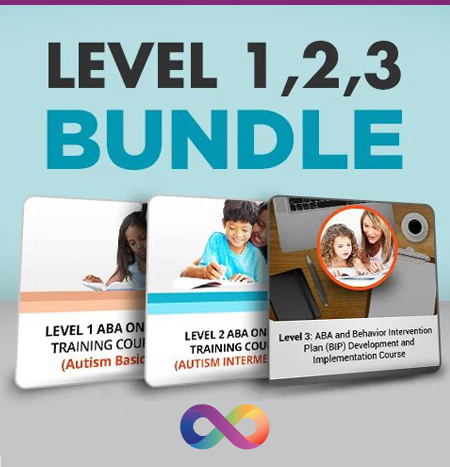
CE Bundles
Learn More
12-Month Access • Early Childhood
• Adolescents and Adults
• School-Based
1 in 36 children in the United States is diagnosed with ASD. Despite these statistics, there are not nearly enough service providers available in the U.S., and the level is even more staggering worldwide. This leaves many children with autism without appropriate services.
Special Learning’s vision is to change this reality by providing parents, educators, behavior analysts, and other professionals with better access to high-quality training.
I just loved the whole course so much. Every session was delivered in such a precise way that was so easy to fathom. Loved the last two sessions in particular because of video examples for each strategy. It became much easy by then.
I just completed the Applied Behavior Analysis (ABA) 20 hour course on line. I found it challenging, comprehensive and thorough. My only regret is that I didn’t take it while I was a full time special education teacher. I’m now retired and embarking on a career in Early Intervention. I’m “armed and ready” to do what I can for my students. I definitely recommend this course to all special education teachers.
I found the course material very interesting and informative. I have learned a lot from it and I have started applying what o have learned with my 10 year-old son who is on the spectrum. I am looking forward to further my studies with Special Learning.
I find the course to be informative and beneficial to my personal and professional knowledge and learning. I have also heard from my (university) students with regards to how much they enjoyed the course.
Thank you very much. I am looking forward to ABA level 2 which I am currently signed up and hopefully ABA level 3. I am very satisfied with the way the modules are presented and the tests that follows. I find it is more satisfying to study online then in a regular workshop because retention is better and the focus is there plus you can take it anytime you are free and relaxed. I also appreciate the references noted at the end of each presentation. I am a very happy client and looking forward to more programs in the future.
Regarding the course is very informative and helpful to me. I have applied the principles at my work place and found good results. It really helped me to change problem behaviors in my clients. I’m looking forward to do such courses from special learning. Thank you.
As an Education Assistant for an Autism classroom, I found your course work very helpful in my everyday work with the students. My knowledge in Autism was enhanced by the detailed lecture especially the courses in Decreasing Behavior and Strategies.
Being an RBT for me was extremely fun because where were you going to find a place where you can be completely silly without having to worry what people thought about you? This was the only job that made me feel like I could make a dramatic difference while being myself.
I also liked to be surrounded by people that had the same goals of wanting to help kids and the teamwork made the job much easier and more enjoyable.
Change and progress was the ultimate goal for our kiddos. The early intervention program was seriously only a miracle because I saw changes in the kiddos that from day one, you wouldn’t even recognize who they were.
Changes from being able to utter 3-4 words where they can only make a syllable from when they started, the behavior decreases in which kiddo that used to engage in 30-40 0 self-harm to only half, learning how to wait during games, table work where they use to swipe and drop to the floor if they had to.
My favorite was when the parents would tell us what amazing progress they were making at home. I used to tear up and felt for these parents so much because it was already difficult for them and now, they can trust and rely on ABA and the therapists knowing their goal was ours.
By Emma Rogers, BA, RBT
Special Learning’s Free Hotline
This is an independent SL Hotline that is part of our VCAT service. This hotline has no connection with any other association or membership group.
Got a question you want a BCBA or other ABA expert to answer? Fill in this form and one of our professionals will handle your question quickly and confidently. You can expect a response in 24-hours or less.